In the precast concrete industry, maintaining the physical integrity of every component is a key priority. Whether you are handling large bridge girders, double-T slabs, tunnel segments, or architectural wall panels, even minor chips, cracks, or structural damage can compromise aesthetics, weaken structural performance, or lead to costly product rejections.
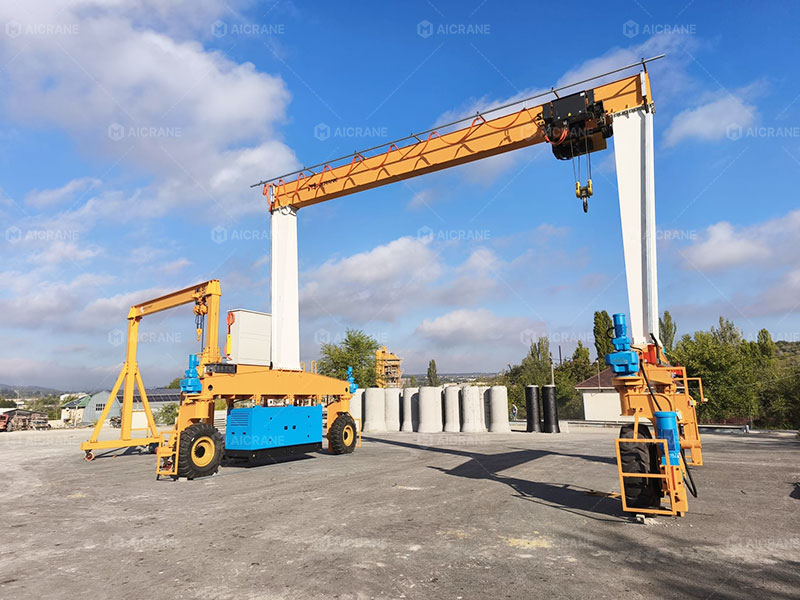
For many precast production facilities, a 20 ton gantry crane serves as the primary material handling equipment in outdoor storage yards and loading bays. However, achieving consistent “zero-damage loading” during frequent daily shipments requires more than just operator intuition. It demands a systematic approach that combines appropriate crane configurations, correct rigging methods, and structured ground-level procedures.
This article details the core best practices for achieving damage-free loading when operating a 20-ton gantry crane.
1. Primary Causes of Precast Damage During Lifting
Before implementing preventive measures, it is helpful to identify the mechanical forces that typically cause damage to concrete elements during crane operations:
- Concentrated Stress: When a precast element is lifted, incorrect lifting points or excessively wide rigging angles can subject the concrete to shear and bending forces that exceed its design limits. This can cause micro-fractures or visible structural cracks.
- Sway and Impact: The inertia generated when a gantry crane starts, stops, or travels can cause a 20-ton load to swing. If uncontrolled, this sway can lead to collisions with nearby storage stacks, delivery trucks, or the crane structure itself.
- Rigging Abrasion: Bare steel wire ropes or worn chain slings can press directly against concrete corners under high tension. This concentrated pressure often causes edge chipping and surface scraping.
- Landing Shock: Lowering a heavy concrete element onto a flatbed trailer too quickly creates a sudden impact. This landing shock can crack the component or damage the transport vehicle’s suspension.
2. Optimizing Your 20-Ton Gantry Crane Configuration
Standard industrial gantry cranes may lack the precision controls needed for high-standard precast operations. To minimize handling risks, we recommend configuring your 20-ton gantry crane with the following features:
Variable Frequency Drive (VFD) Control
Standard single-speed or two-speed motors can cause jerky movements during start-up and braking. A fully integrated VFD system enables smooth, infinitely variable speed adjustments across the gantry travel, trolley travel, and hoisting mechanisms.
- Operational Benefit: VFD controls eliminate sudden shock loads during initial lift-off, allowing the precast element to rise smoothly and gradually from the ground.
Anti-Sway Technology
Load swing is a common challenge during trolley and gantry travel. Modern electronic anti-sway software or mechanical reeving configurations automatically counteract acceleration and deceleration forces.
- Operational Benefit: Keeping the load stable in mid-air reduces horizontal movement, allowing operators to navigate tight yards safely and avoid accidental collisions.
Dedicated Spreader Beams
Rigging a load directly to a single hook forces the slings inward, creating significant lateral compressive forces on the concrete element. A dedicated spreader beam distributes the lift vertically, aligning the pull directly with the cast-in lifting anchors.
- Operational Benefit: Spreader beams keep the rigging lines close to a vertical angle of 90 degrees, removing lateral stress from the precast element.
3. Rigging Selection and Edge Protection
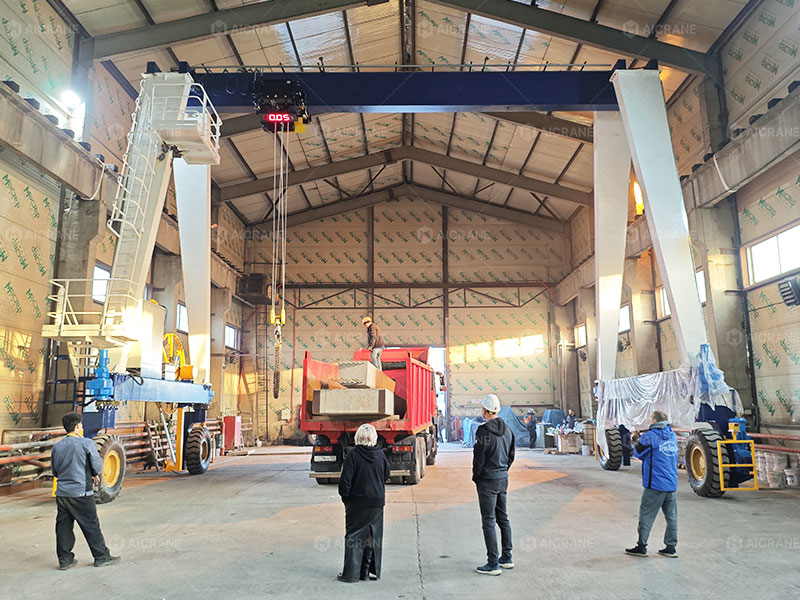
Even with an optimized 20 ton mobile gantry crane, improper rigging techniques can still result in surface damage.
Selecting the Right Sling Material
- Synthetic Webbing Slings: For architectural panels or finished fair-faced concrete, high-strength synthetic slings are highly recommended. They provide a wider load-bearing surface and a degree of elasticity, which reduces localized pressure.
- Edge Protectors: If your application requires steel wire ropes or chain slings, you should place heavy-duty edge protectors (made of polyurethane, molded rubber, or recycled tires) between the rigging and the concrete. These protectors distribute the tension force and prevent edge chipping.
Rigging Angles and Lifting Point Protocols
Precast elements are engineered with specific lifting inserts (such as cast-in loops, anchors, or pin systems) designed to handle specific load distributions.
- Follow Engineering Drawings: Rigging crews must locate and use only the designated lifting points shown on the element’s technical drawing. Avoiding guesswork is essential to preventing structural failure.
- Sling Angle Control: When using a multi-leg sling without a spreader beam, the angle between the two sling legs should ideally be kept under 60 degrees. As this angle increases, the tension within the slings increases significantly, multiplying the inward crushing force on the concrete.
4. Loading and Trailer Layout Best Practices
The final loading phase onto transport vehicles is where many superficial and structural damages occur. Managing this stage requires careful layout planning and slow-speed control.
Systematic Dunnage Alignment
The support system on a flatbed trailer should replicate the support conditions used during the curing and storage phases at the plant.
- Vertical Alignment: When stacking multiple precast elements on a single trailer (such as hollow-core slabs), ensure that the wooden dunnage blocks between each layer are placed in a perfect vertical line. Misaligned dunnage can create a lever effect, causing the weight of upper elements to crack the lower ones.
- Material Selection: Use medium-softwood blocks (such as pine) or industrial rubber pads. Avoid using concrete blocks or bare steel supports, as rigid materials do not allow for even load distribution.
Inching Control for Precision Placement
As a 20-ton element is lowered to within 10 to 20 centimeters of the trailer bed, the crane operator should transition to a dedicated slow-speed or “inching” mode.
- Slow Descent: The hoist speed should be maintained below 0.5 meters per minute during final touchdown.
- Use Tag Lines: Ground crew members should use tag lines attached to the ends of the concrete element to guide its orientation from a safe distance. Hand-touching the 20-ton load during active lifting should be avoided.
- Soft Touchdowns: The element must settle gently onto the dunnage blocks to prevent landing shocks.
5. Ground Coordination and Communication
Safe and efficient material handling depends on reliable coordination between the crane operator and the ground crew.
- Two-Person Guidance and Tag Lines: Wind and crane inertia can cause large-surface precast elements to rotate. Two ground crew members positioned at safe distances can control this rotation easily using tag lines, eliminating the need to physically push or pull the suspended load.
- Clear Signal Protocols: High-piled precast stacks and large transport vehicles can create blind spots for the crane operator. To address this, a certified signalperson should guide the operator using standard hand signals or dedicated two-way radio channels, ensuring clear visibility throughout the path of travel.
Conclusion: The Operational Benefits of Gentle Handling
In the precast concrete industry, minimizing loading damage is directly linked to operational profitability and customer satisfaction. Repairing chipped edges or remaking cracked elements is not only expensive but can also delay project schedules at the construction site.
By utilizing a 20-ton gantry crane equipped with VFD controls, anti-sway systems, and proper spreader beams—combined with systematic dunnage alignment and proper rigging protection—your facility can significantly reduce product damage and improve loading cycle times.
If you are planning to upgrade your precast yard logistics or install a new gantry crane, contact Aicrane engineering team to discuss customized lifting solutions tailored to your precast production requirements.