Container terminals and inland logistics hubs handle a wide variety of cargo types within the same facility. During a single shift, operators regularly switch between moving standard dry van containers and liquid tank containers, often called ISO tanks. This mixed workflow presents specific handling requirements. Standard containers require fast cycle times and dense stacking, while tank containers require careful movement to handle the weight shifts of liquid cargo.
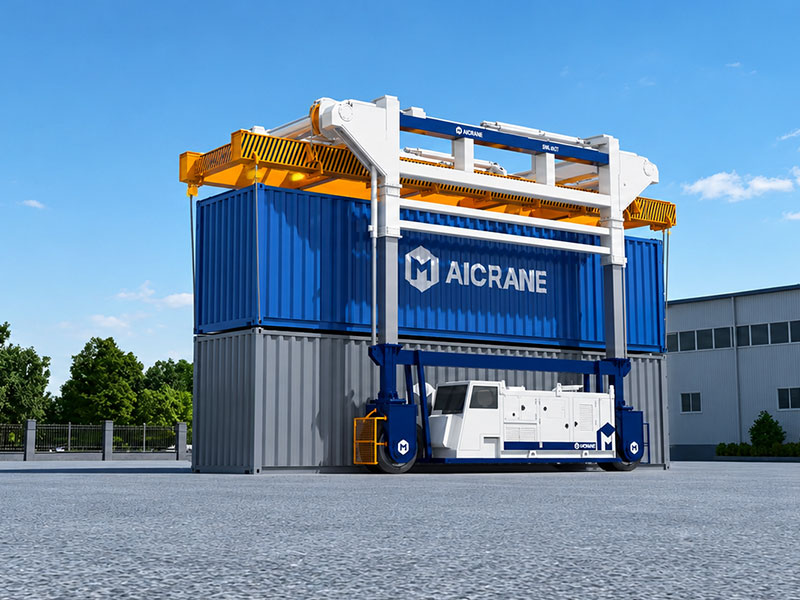
A versatile container straddle carrier provides a practical solution for terminals handling this cargo mix. Equipped with adjustable control systems and independent mobility, a single machine can manage both standard and tank container operations safely. For terminal operators planning to upgrade their fleets, selecting the right yard handling machinery is crucial to maintaining high container terminal productivity.
1. Work Characteristics of Standard and Tank Containers
To handle both container types efficiently, it is necessary to understand how their physical differences affect everyday yard operations.
Standard ISO Containers
Standard 20-foot, 40-foot, and 45-foot containers are uniform in shape, and their cargo is typically secured and stationary. The primary goal when handling these units is operational speed and dense stacking. Equipment must be able to lock onto corner castings quickly, travel reliably over yard surfaces, and stack containers up to three or four high without delays. Maintaining consistent container stacking configurations helps maximize the storage capacity of the terminal footprint.
ISO Tank Containers
Tank containers have the same outer steel frame dimensions as standard 20-foot containers, but they carry bulk liquids, liquefied gases, or chemicals inside a central cylinder. When a straddle carrier accelerates, slows down, or turns, the liquid inside a partially filled tank moves back and forth. This liquid movement shifts the weight distribution of the load. If the vehicle does not adjust for this movement, the uneven weight can affect the stability of the machine.
Tank containers also have exposed valves and pipes that can be damaged by sudden drops or heavy vibrations. Therefore, operators must implement strict protocols for iso tank container handling safety to prevent accidents, leaks, or structural damage.
2. Handling Standard Containers with Straddle Carriers
For standard dry containers, the design of the straddle carrier offers several operational advantages that help maintain steady container movement. By acting as heavy lifting yard equipment that combines lifting and transport, these machines simplify terminal workflows.
Direct Travel Path Compared to Gantry Cranes
Unlike yard layouts that rely on rubber tired gantry cranes or rail mounted gantry cranes to manage stacks, and terminal tractors to transport containers, a straddle carrier performs multiple tasks. It can pick up a container directly from a truck chassis or rail siding, carry it across the yard, and place it into a stack.
While RTG cranes and RMG cranes are highly efficient for stacking in designated blocks, they cannot transport containers across different terminal zones. A straddle carrier bypasses this limitation, reducing the need to coordinate multiple machines and shortening truck waiting times at the gate. This direct transport method serves as an excellent complement to high-speed ship-to-shore gantry cranes, ensuring that the quay area does not become congested.
Stacking Configurations
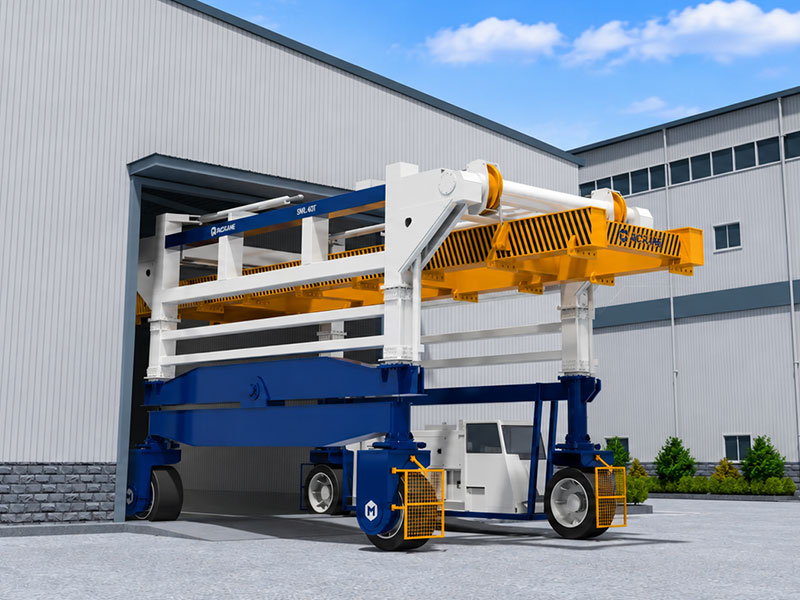
Straddle carriers allow yards to utilize vertical space to store more containers on the same footprint. Depending on the yard design and the straddle carrier specifications, they can be configured for:
- 1-over-1 stacking (two containers high): Useful for fast-transit shuttle zones and rapid rail transfers.
- 1-over-2 stacking (three containers high): Provides a balance between storage capacity and easy access to individual units.
- 1-over-3 stacking (four containers high): Maximizes storage capacity in small yards or highly congested terminals.
Maneuverability and Steering Modes
With rubber tires and multi-wheel steering systems, straddle carriers can move without track restrictions, unlike rail mounted gantry cranes. Features like crab steering maneuverability and zero-radius turning allow operators to align the spreader with the container corner castings in tight spaces. This reduces the time needed to prepare for each lift and increases overall terminal throughput.
3. Safety Systems for Tank Container Handling
To handle tank containers safely alongside standard cargo, modern straddle carriers utilize sensors and electronic control systems to manage the movement of liquid cargo. These systems provide active stability control for straddle carriers during transport.
Automatic Anti-Sway Systems
To prevent liquid movement from causing the container to swing during transport, straddle carriers use angle sensors and gyroscopes on the vehicle frame. When the system detects the start of a swing, the electronic controller makes small, automatic adjustments to the hoist motor speeds or hydraulic valves. Integrating automatic anti-sway systems stops the swinging motion quickly, keeping the load steady and protecting the vehicle structure from twisting forces.
Weight Monitoring and Speed Limits
When a straddle carrier locks onto a container, weight sensors on the spreader measure the total load and detect uneven weight distribution. By integrating this weight data with the terminal operating system integration, the vehicle can identify when it is lifting a liquid tank container.
The control system then automatically switches the vehicle to a safe-driving profile. This profile limits the maximum travel speed and reduces the turning speed based on the load weight, helping to keep the vehicle stable during turns and preventing lateral tip-overs.
Smooth Drive Controls
To prevent liquid from splashing violently inside the tank, straddle carriers use variable frequency drives for both traveling and hoisting. Utilizing a variable frequency drive for hoisting ensures smooth acceleration and deceleration curves. By eliminating sudden jerks when starting, stopping, or lifting, the machine reduces the internal movement of the liquid, protecting the tank valves and maintaining a consistent center of gravity.
4. Operational and Maintenance Benefits of a Unified Fleet
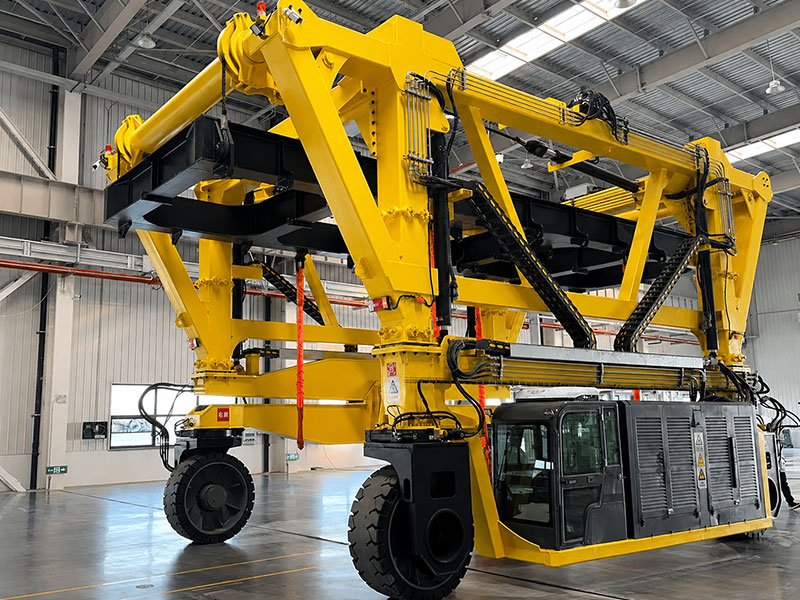
Using one type of straddle carrier to handle both standard containers and liquid tanks offers practical benefits for terminal management, particularly in terms of cost control and logistics planning.
- Lower Equipment Procurement Costs: Operators do not need to buy specialized, low-speed equipment specifically for tank containers. Partnering with a reliable straddle carrier manufacturer allows ports to acquire a single fleet of straddle carriers that can stack dry containers at normal speeds and safely move hazardous chemical tanks when needed. This versatility simplifies the spare parts inventory.
- Simplified Operator and Maintenance Training: With a unified fleet, drivers and mechanics only need to learn the operation and maintenance procedures of a single machine type. This consistency reduces training time and lowers the risk of human error during operations. It also simplifies the scheduling of routine container handling crane maintenance tasks.
- Lower Energy Consumption: Modern fleets can be optimized for eco-friendly operations. Implementing a hybrid straddle carrier or fully electric model helps terminals reduce emissions and lower fuel costs while maintaining the power required to lift heavy liquid tanks.
- Consistent Safety Levels: Because safety features like anti-sway controls and speed limits are built directly into the machine’s control system, the safety of the yard does not depend solely on the experience level of the individual operator. This system-based safety helps protect both the cargo and the yard crew.
5. Conclusion
Managing a mix of standard containers and liquid tank containers is a routine requirement for modern transport terminals. By using sensors, automated speed controls, and smooth drive systems, container straddle carriers can handle both cargo types safely.
This capability allows terminal operators to maintain reliable transport workflows and safe yard conditions without investing in specialized, single-purpose machinery. Choosing the right configuration of container straddle carriers helps ports balance high operational efficiency with strict safety standards.