In container terminal operations, Rubber Tired Gantry (RTG) crane productivity is typically measured by Moves Per Hour (MPH) or Gross Crane Productivity (GCP). While terminal operators invest heavily in high-speed hoisting systems, advanced anti-sway technology, and automated steering, these hardware advantages are frequently neutralized by a silent productivity killer: container micro-shuffling.
Unlike macro-marshalling – which involves planned, large-scale yard cleanup during off-peak hours – micro-shuffling refers to the unplanned, real-time repositioning of obstructing containers to access a target box buried beneath them in a stack. When an RTG operator must perform two, three, or even four unproductive moves just to deliver one import container to an external truck, the net yard productivity drops precipitously.
This article examines the operational mechanics of micro-shuffling, quantifies its impact on rubber tyre gantry crane efficiency, and outlines actionable, data-driven strategies to eliminate this bottleneck.
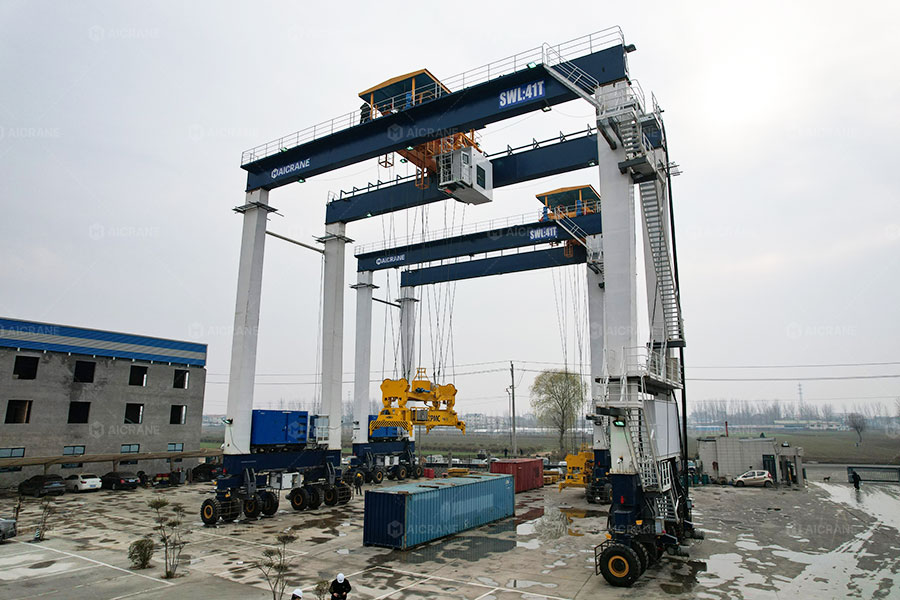
The Mechanical and Financial Math of a Micro-Shuffle
To understand why micro-shuffling is so damaging to terminal key performance indicators (KPIs), we must look at the cycle time of a single RTG move.
A standard, productive import delivery cycle consists of:
- Trolley travel to the target slot.
- Lowering the spreader and locking the twistlocks onto the corner castings.
- Hoisting the container to clear the stack.
- Gantry or trolley travel to the chassis transfer lane.
- Aligning and landing the container onto the truck chassis.
- Unlocking and hoisting the empty spreader back to safe travel height.
On average, a highly skilled operator executing this sequence on a modern RTG container gantry crane can maintain a cycle time of 90 to 120 seconds, translating to approximately 30 to 40 gross moves per hour under ideal conditions.
However, when a target container is buried under two obstructing boxes, the operator must execute the following “micro-shuffles” before completing the delivery:
- Pick obstructing container A, hoist, trolley to an adjacent empty slot, land, unlock, and hoist empty.
- Pick obstructing container B, hoist, trolley to another slot, land, unlock, and hoist empty.
- Pick the target container, hoist, trolley to the chassis lane, and deliver.
- (Optional but common) Return containers A and B back to the stack to maintain yard integrity.
This sequence transforms a single productive delivery into five distinct crane movements. Under these conditions, the net productivity for that specific transaction drops to fewer than 8 productive moves per hour. Furthermore, this cycle rapidly accelerates mechanical wear on hoisting wire ropes, brakes, and twistlocks, while drastically increasing fuel consumption in diesel-powered RTGs or power draw in electrified RTGs (E-RTGs).
Root Causes of Unplanned Micro-Shifting
Unplanned yard shuffles are rarely the fault of the crane operator; rather, they are the physical manifestation of data and scheduling disconnects across the terminal ecosystem.
1. Unsynchronized Landside Arrivals
When external trucks arrive at the terminal gate without a coordinated scheduling system, the Terminal Operating System (TOS) cannot predict which container will be requested next. If an import block is stacked five-high (1-over-4) purely by vessel discharge order, the likelihood of needing to dig for a box is statistically high.
2. Rigid or Outdated Stacking Rules
If stacking logic in the TOS relies on broad, static parameters (e.g., grouping all imports from a single vessel together regardless of consignee profile or dwell-time history), high-volume, fast-moving containers inevitably end up underneath slow-moving cargo.
3. Lack of Real-Time TOS-to-Crane Integration
If the TOS does not have real-time visibility into the exact 3D coordinates of every container in the block, or if operators manually move containers without updating the system, the inventory database degrades. This leads to “ghost shuffles,” where operators must hunt for missing containers or move boxes that the system assumed were already clear.
Actionable Strategies to Mitigate Micro-Shuffling
Maximizing RTG MPH requires a multi-layered approach that combines predictive software planning, strict gate management, and equipment-level technology.
Strategy 1: Implement a Dynamic Truck Appointment System (TAS)
A robust Truck Appointment System is the most effective defense against landside-driven micro-shuffling. By restricting truck arrivals to specific, pre-defined hourly windows, the terminal gains foresight.
- Pre-Staging Workflows: 1 to 2 hours before a scheduled appointment window, the TOS can generate a list of containers expected for pickup. During minor lulls in yard activity, RTG mobile gantry cranes can pre-stage these boxes to the top of the stack.
- Block Segregation: Containers associated with carriers who have confirmed appointments can be grouped into dedicated “active delivery bays,” while unappointed or late-running cargo is kept in separate stacks.
Strategy 2: Deploy Predictive Stacking Algorithms
Static stacking rules are insufficient for modern high-density terminals. Modern TOS platforms utilize machine learning and historical dwell-time data to optimize container placement upon vessel discharge:
- Consignee Profiling: Group containers based on the historical behavior of the importer. If a specific importer historically picks up their cargo within 12 hours of vessel discharge, their containers should never be stacked beneath cargo belonging to an importer with a 5-day average dwell time.
- Weight-Symmetric Stacking: While safety dictates that heavy containers go at the bottom, predictive stacking software balances safety regulations with dwell-time projections to ensure that “fast-heavy” boxes are isolated from “slow-light” boxes.
Strategy 3: Optimize Housekeeping during Off-Peak Windows
Yard housekeeping should not be an afterthought. It must be scheduled systematically as part of daily operations.
- Targeted Pre-Marshalling: Run automated TOS scripts during the night shift or during vessel-free windows to identify “deeply buried” containers with upcoming appointments. The system should generate a sequence of housekeeping instructions for the RTGs to clear these obstructions before the morning gate rush.
- Opportunistic Shuffling: When an RTG is already positioned over a bay to deliver a container, the TOS should calculate if moving an adjacent, obstructing container to a nearby permanent slot makes long-term operational sense, rather than simply dumping it in the nearest temporary hole.
Strategy 4: Upgrade RTG Assist Technologies
While software aims to eliminate shuffles, some real-time movements are unavoidable. Minimizing the cycle time of these shuffles is critical.
- Automatic Positioning Systems (APS): Utilizing GPS, lasers, or transponders, APS automatically steers the port gantry crane and positions the trolley precisely over the target slot, cutting out the operator’s manual micro-adjustments.
- Active Anti-Sway and Micro-Motion Controls: Electronic anti-sway systems damp out spreader oscillations during high-speed deceleration. This allows the operator to land the spreader on obstructing containers immediately, shaving 5 to 10 seconds off every single shuffle cycle.
- Smart Landing Systems: Automated soft-landing features ensure that when the spreader or container touches down during a shuffle, it does so at an optimized, safe speed without requiring the operator to creep down slowly, preserving both cycle speed and equipment longevity.
Strategy 5: Leverage Dual-Cycle and Twin-Twenty Handling
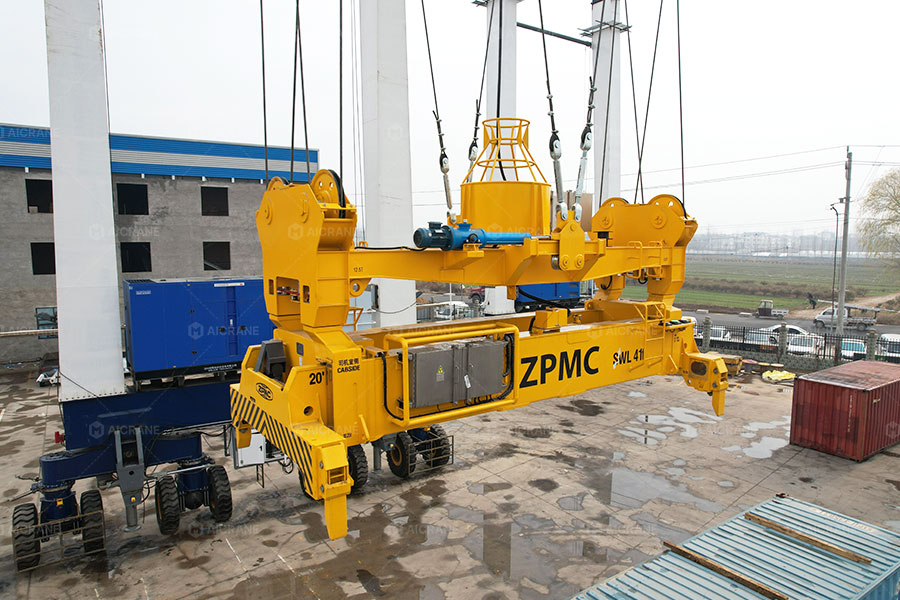
Where equipment allows, maximize the payload of every movement. If an RTG is equipped with a telescopic spreader capable of twin-twenty handling, and the stack configuration permits, operators can shuffle two empty or light 20-foot containers simultaneously rather than executing two separate single-lift shuffles.
Conclusion
Container micro-shuffling is an operational tax that directly erodes terminal profitability, driver turn times, and equipment health. Achieving high RTG Moves Per Hour is not merely a matter of instructing crane operators to work faster; it is a structural challenge that must be addressed through synchronized data, proactive stack planning, and precise equipment execution. By implementing a predictive stacking logic, aligning landside gate arrivals with yard layouts, and equipping operators with modern positioning aids, terminals can transform their RTG operations from a reactive, dig-heavy workflow into a highly streamlined, high-throughput logistical engine.